





Keresés
Keresés
Close this search box.

hu / en

Social network benefits for cluster firms: A co-worker mobility approach - Lengyel Balázs, Lőrincz László és szerzőtársaik tanulmánya megjelent az Environment and Planning A: Economy and Space folyóiratban Tovább olvasom

Tovább olvasom

Még a csavarokat is hozzák magukkal? Itt az igazság a hazánkba érkező kínai EV-beruházások hatásairól - Sass Magdolna és Balla Soma cikke a KRTK blogban a Portfolion Tovább olvasom

Tovább olvasom

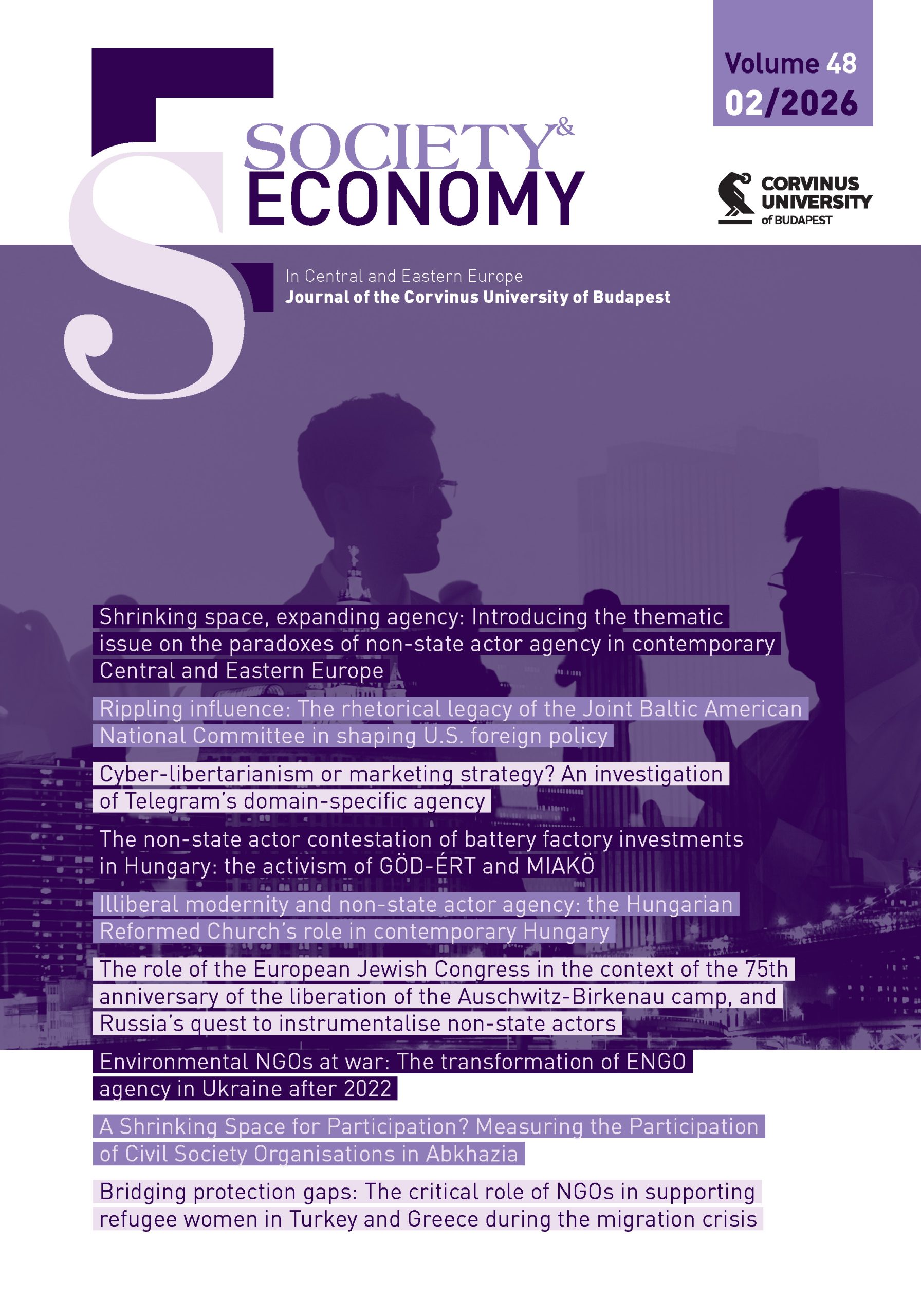
The non-state actor contestation of battery factory investments in Hungary: the activism of GÖD-ÉRT and MIAKÖ - Éltető Andrea és Ricz Judit cikke megjelent a Society and Economy in Central and Eastern Europe folyóiratban Tovább olvasom

Tovább olvasom

Forecasting Aluminum Futures Prices: A Comparative Evaluation of Classical, Deep Learning and Transformer-based Models - Bareith Tibor és szerzőtársai tanulmánya Tovább olvasom

Tovább olvasom

Defining daily space use patterns in Hungary: mapping functional catchment areas - Berkes Judit és szerzőtársai tanulmánya megjelent a KSH Regional Statistics kiadványában Tovább olvasom

Tovább olvasom

‘In Hungary, Everything Is Better’ – Recently Arrived Older German Migrants’ Narratives about Relocating to Rural Hungary - Gábriel Dóra, Németh Krisztina és Váradi Monika tanulmánya Tovább olvasom

Tovább olvasom

KTI Szeminárium: Reiff Ádám – The Ukrainian Refugee Crisis and the Politics of Public Opinion: Evidence from Hungary

Cím: The Ukrainian Refugee Crisis and the Politics of Public Opinion: Evidence from Hungary

Szerzők: Thomas B. Pepinsky; Ádám Reiff, Krisztina Szabó

Abstract

The 2022 Russian invasion of Ukraine is a watershed moment in European politics. The invasion prompted a massive influx of refugees into Central Europe, a region in which immigration has proven highly contentious and politically salient over the past thirty years. We study public opinion towards refugees in Hungary, a highly exclusionary political environment in which anti-migrant and anti-refugee sentiments are commonly invoked by the ruling government. Combining historical public opinion data from the past decade with original survey data collected in April 2022, we demonstrate that the Ukrainian refugee crisis was accompanied by a large increase in tolerance for refugees, reversing what had previously been one of the most antirefugee public opinion environments in Europe. To explain this reversal, we use a series of survey experiments coupled with detailed settlement-level demographic data to investigate how conflict proximity and racial, religious, and national identity (three manifestations of what we term civilizational characteristics) shape openness to refugees. We find that the distinguishing feature of the 2022 refugee crisis was that refugees were mostly white European Christians driven from their home country by conflict. We discuss the implications of our argument for Hungary, for European politics in times of crisis, and for the politics of public opinion in competitive authoritarian regimes.

Helyszín: MTA; HTK – T.4.23; emellett online is megtekinthető lesz.

2026

Aug

26

H

K

Sz

Cs

P

Sz

V

27

28

29

30

31

1

2

3

4

5

6

7

8

9

10

11

12

14

15

16

17

18

19

20

21

22

23

24

25

26

27

28

29

30

31

1

2

3

4

5

6

Következő hónap >
2023.04.20. - 2023.04.20.