



Keresés
Keresés
Close this search box.

hu / en

Még a csavarokat is hozzák magukkal? Itt az igazság a hazánkba érkező kínai EV-beruházások hatásairól - Sass Magdolna és Balla Soma cikke a KRTK blogban a Portfolion Tovább olvasom

Tovább olvasom

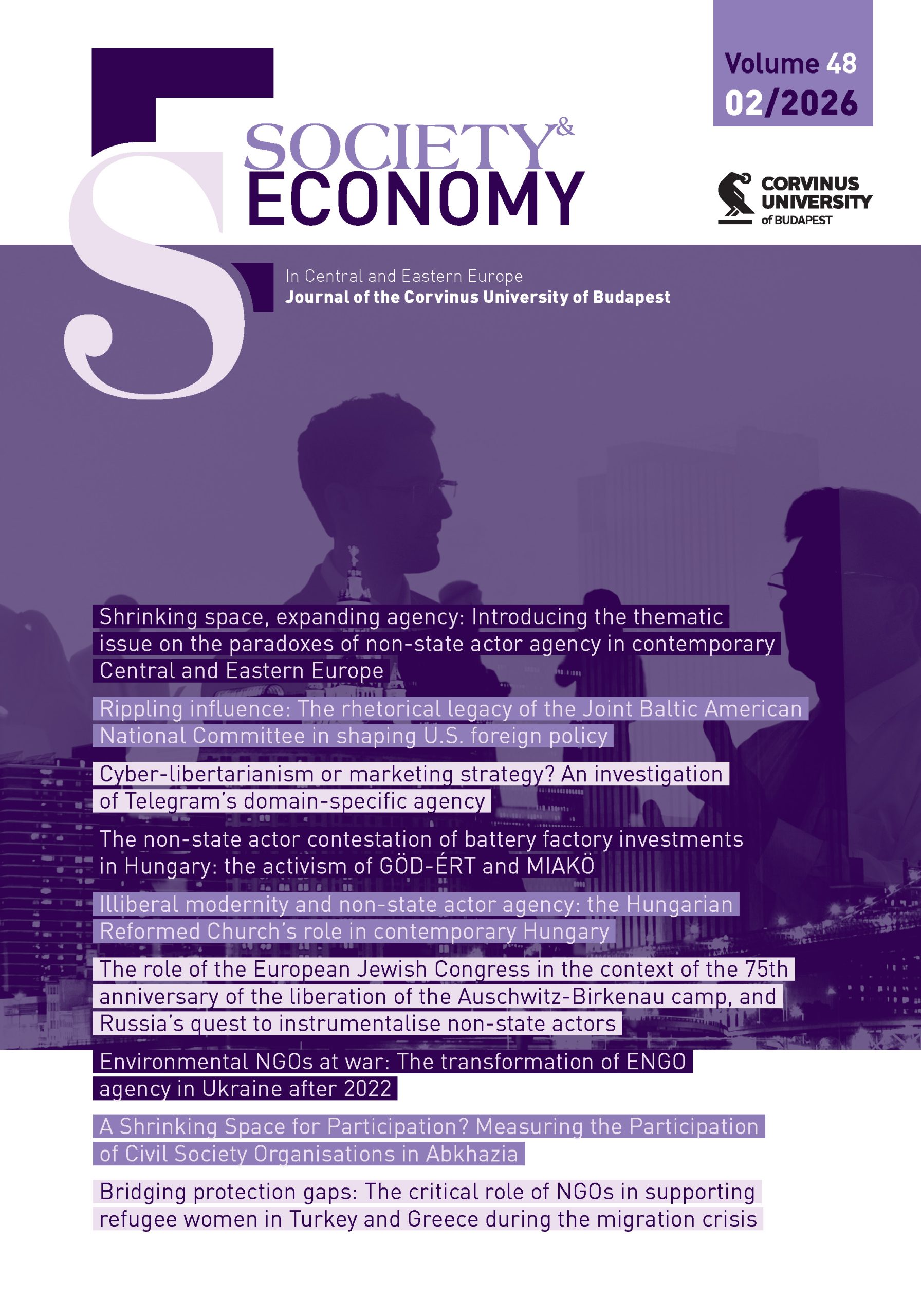
The non-state actor contestation of battery factory investments in Hungary: the activism of GÖD-ÉRT and MIAKÖ - Éltető Andrea és Ricz Judit cikke megjelent a Society and Economy in Central and Eastern Europe folyóiratban Tovább olvasom

Tovább olvasom

Forecasting Aluminum Futures Prices: A Comparative Evaluation of Classical, Deep Learning and Transformer-based Models - Bareith Tibor és szerzőtársai tanulmánya Tovább olvasom

Tovább olvasom

Defining daily space use patterns in Hungary: mapping functional catchment areas - Berkes Judit és szerzőtársai tanulmánya megjelent a KSH Regional Statistics kiadványában Tovább olvasom

Tovább olvasom

‘In Hungary, Everything Is Better’ – Recently Arrived Older German Migrants’ Narratives about Relocating to Rural Hungary - Gábriel Dóra, Németh Krisztina és Váradi Monika tanulmánya Tovább olvasom

Tovább olvasom

The strong core of housing markets with partial order preferences - Schlotter Ildikó és Mirabel Mendoza-Cadena tanulmánya megjelent a Journal of Mathematical Economics folyóiratban Tovább olvasom

Tovább olvasom

KTI szeminárium: Venyige Róbert – Property Rights and the End of the Feudal Economic System


2023.09.28. a T4.23-as szemináriumi szobában 13.00-kor.


Előadó: Venyige Róbert

Cím: Property Rights and the End of the Feudal Economic System


Absztrakt:

What were the causes of the transformation of feudalism to capitalism? How do changing market conditions affect economic institutions? I examine the disappearance of the feudal economic system and the formation of modern land property rights in the Kingdom of Hungary during the 19th century. The separation of the landlord and serf economies and the division of the commons finalized the abolition of the serfdom and created stable land property rights that were a prelude to modern agricultural production. I investigate this in the context of the economic integration (customs union and the construction of railroads) of the Habsburg Empire. I find that an improvement in market access increased the probability of the partition of landlord and serf economies. My results suggest that potential returns on secure property rights were important, but transaction costs played an important role in delaying their development.


Az előadásra hibrid formában kerül sor zoom felületen, illetve személyesen a T4.23-as szemináriumi szobában 2023.09.19-én, KEDDEN, 13.00 órától.


2026

Aug

24

H

K

Sz

Cs

P

Sz

V

27

28

29

30

31

1

2

3

4

5

6

7

8

9

10

11

12

14

15

16

17

18

19

20

21

22

23

24

25

26

27

28

29

30

31

1

2

3

4

5

6

Következő hónap >
2023.09.28. - 2023.09.28. | KTI szemináriumi szoba; T4.23.