



Keresés
Keresés
Close this search box.

hu / en

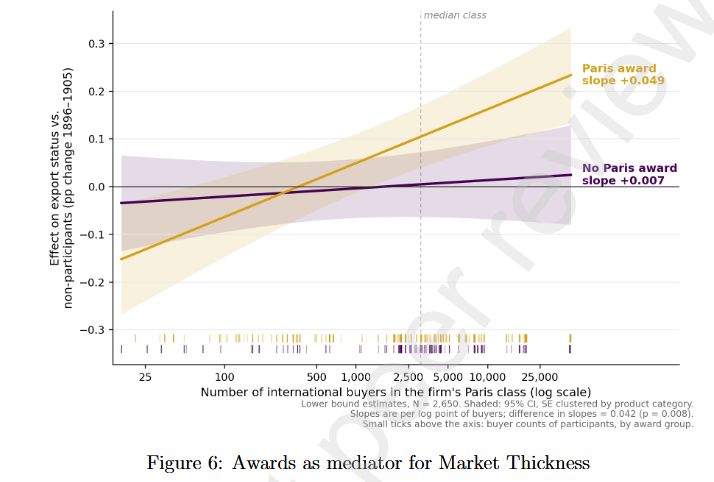
What Happens in Paris, Does Not Stay in Paris: Trade Fairs and Search and Matching Frictions - Békés Gábor az 1900-as párizsi világkiállításon részt vevő magyar vállalatokat vizsgálja Tovább olvasom

Tovább olvasom

Social network benefits for cluster firms: A co-worker mobility approach - Lengyel Balázs, Lőrincz László és szerzőtársaik tanulmánya megjelent az Environment and Planning A: Economy and Space folyóiratban Tovább olvasom

Tovább olvasom

Még a csavarokat is hozzák magukkal? Itt az igazság a hazánkba érkező kínai EV-beruházások hatásairól - Sass Magdolna és Balla Soma cikke a KRTK blogban a Portfolion Tovább olvasom

Tovább olvasom

The non-state actor contestation of battery factory investments in Hungary: the activism of GÖD-ÉRT and MIAKÖ - Éltető Andrea és Ricz Judit cikke megjelent a Society and Economy in Central and Eastern Europe folyóiratban Tovább olvasom

Tovább olvasom

Forecasting Aluminum Futures Prices: A Comparative Evaluation of Classical, Deep Learning and Transformer-based Models - Bareith Tibor és szerzőtársai tanulmánya Tovább olvasom

Tovább olvasom

Defining daily space use patterns in Hungary: mapping functional catchment areas - Berkes Judit és szerzőtársai tanulmánya megjelent a KSH Regional Statistics kiadványában Tovább olvasom

Tovább olvasom

Bárdits Anna habilitációs előadás: Family Foster Care or Residential Care: The Impact of Home Environment on Children Raised in State Care


Bárdits Anna habilitációs előadása a K 11-12-es földszinti előadóban 2024. szeptember 19-én 13.00 órától kezdődik.

Abstract

This paper investigates how the type of home environment – family foster care or residential care – affects the adult outcomes of individuals who were raised in state care during adolescence. While it is established in the literature that living in residential care is detrimental for babies, the effect of living in different types of care as an older child is underexplored. We use Hungarian individual-level administrative panel data and follow the children from age 13 until age 19. We show that the adult outcomes of adolescents who grew up in a foster family are substantially better even after controlling for a rich set of variables, including indicators of cognitive and non-cognitive skills, and mental problems observed at age 13. Young adults who grew up in family foster care are 8 percentage points more likely to complete secondary education, and 11 percentage points less likely to spend at least 6 months without either working or studying at age 19, than comparable peers raised in residential care. Using mental health medication is 5 percentage points less likely. For girls, the probability of teenage birth and abortion are smaller by 12 percentage points each. IV estimations using local foster mother capacity show large albeit statistically insignificant benefits from foster care.

Co-author: Gábor Kertesi

2026

Aug

27

H

K

Sz

Cs

P

Sz

V

27

28

29

30

31

1

2

3

4

5

6

7

8

9

10

11

12

14

15

16

17

18

19

20

21

22

23

24

25

26

27

28

29

30

31

1

2

3

4

5

6

Következő hónap >
2024.09.19. - 2024.09.19. | MTA HTK (1097 Budapest, Tóth Kálmán u. 4.) K11-12-es földszinti előadóban és Zoom felületen