



Farmers do not simply retire:
Why generational renewal in agriculture needs more than subsidies
Imre Fertő
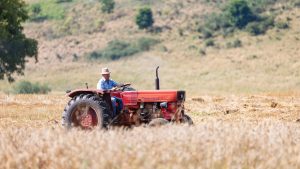
Across Europe, the ageing of the farming population is often discussed as if it were a straightforward succession problem: too many older farmers, too few young entrants, and insufficient incentives to make the transfer happen. The implied policy solution is equally straightforward: provide more support for young farmers, improve access to capital, and encourage older farmers to step aside.
This diagnosis is not wrong, but it is incomplete. Farm succession is not only an economic transaction. It is also a social, emotional and institutional transition. A farm is not simply an asset to be transferred; it is often a lifetime’s work, a source of status, a family history, and a way of being recognised in the local community. Treating succession as if it were mainly a matter of money risks misunderstanding why many older farmers remain in control even when retirement would appear economically rational.
This matters because the demographic imbalance is significant. In the European Union, more than one-third of farm managers are over 65, while only around 6–11 per cent are under 35. The consequences go beyond the age profile of farm owners. Ageing farming systems may face slower technology adoption, weaker investment incentives, restricted land mobility, and greater vulnerability to land abandonment. The issue is therefore not simply who will own the farm, but whether agriculture can remain adaptive, innovative and resilient.
The difficulty is that many policy instruments still approach the problem through the lens of incentives. Young farmer schemes, start-up grants and preferential support can reduce barriers to entry. They are important, especially where access to land and finance is difficult. But they rarely address what happens on the other side of the transition: the older farmer’s reluctance to transfer control.
A growing body of rural sociology helps explain why. The identity of the “good farmer” is built around visible work, order, responsibility, control and care for land and animals. These are not minor cultural details. They are forms of symbolic capital: they define how farmers are judged by others and how they judge themselves. For an older farmer, handing over management may therefore be experienced not as a neutral administrative act, but as a loss of usefulness, authority and social recognition. I argue that succession is shaped by identity, health and production decisions, rather than by financial incentives alone.
This helps explain a common paradox. Older farmers may remain active even when their physical capacity is declining. From the outside, this can look like stubbornness or poor planning. From the farmer’s perspective, however, staying involved may be a way to preserve autonomy, social status and daily structure. Retirement can be perceived less as liberation than as a threat to identity.
Health and wellbeing are therefore not secondary issues in farm succession. They are central. In many rural areas, access to health care, social care and pension security is uneven. If the farm remains the main source of income, identity and local belonging, withdrawal becomes risky. Yet continuing to work under declining physical capacity can increase exposure to accidents, chronic pain, isolation and mental stress. I describe this as a reinforcing cycle: the desire to retain control sustains workload; workload may accelerate health deterioration; declining health increases uncertainty; uncertainty shortens planning horizons and weakens investment and innovation.
This cycle has sector-wide consequences. When succession is delayed, potential successors may remain in subordinate roles for too long. They may not gain real decision-making authority, even if they are already doing much of the work. Investment decisions may be postponed because the future ownership or management structure is unclear. Innovations that require long payback periods — digital tools, precision agriculture, automation, climate adaptation measures — may be delayed, not necessarily because older farmers reject technology, but because uncertainty makes long-term investment less attractive.
The policy lesson is that forcing exit is unlikely to work. Nor is it desirable. Older farmers hold practical knowledge, local experience and tacit judgement that are valuable for the continuity of farms and rural communities. The challenge is not to remove them from agriculture, but to redesign their role.
This requires shifting the policy imagination from retirement to transition. Successful generational renewal is less likely to depend on a single handover moment than on a gradual reorganisation of authority, work and recognition. Collaborative farming models, shared management arrangements, mentoring programmes and advisory roles can create intermediate stages between full control and complete exit. In these models, the older farmer does not disappear from the farm. Instead, their role changes: from sole decision-maker to mentor, adviser, senior partner or custodian of local knowledge.
Such approaches can reduce the psychological cost of succession. If handing over is framed as status loss, resistance is understandable. If it is framed as a dignified role transition, it becomes more feasible. Fertő’s review suggests that control-sharing, institutionalised knowledge transfer, mentoring roles, age-friendly work organisation and collaborative farming can all help reduce the risks of identity loss, health decline and production uncertainty.
Age-friendly farming environments are especially important here. The “Farmer’s Yards” approach, for example, focuses not only on making farm work safer, but on enabling older farmers to remain useful while reducing physical strain. This means redesigning workspaces, reducing accident risks, supporting supervision and advisory roles, and maintaining community ties. The aim is not rapid removal from work, but a gradual transformation of presence: less physical burden, more knowledge-sharing and decision support.
This broader view also changes how we think about rural services. If farm succession is partly shaped by health, care, pensions, advisory capacity and local trust, then agricultural policy cannot solve the problem alone. Generational renewal requires coordination between agricultural support, rural health infrastructure, social services, legal advice, mediation and local development policy. Subsidies may help young entrants, but they cannot by themselves resolve identity loss, family conflict, uncertainty over control or the absence of trusted advisory institutions.
The Central and Eastern European context makes this even more important. Much of the international literature on farm succession is based on Western European or family-farm contexts. Post-socialist agrarian structures may operate differently. Land ownership, memories of collectivisation and restitution, fragmented or concentrated farm structures, weak advisory capacity and uneven rural services can all shape succession dynamics. My review highlights that Central and Eastern European cases remain underrepresented in the literature, although institutional embeddedness may be especially important in these settings.
This is not only an empirical gap; it is a policy risk. If generational renewal programmes are imported without attention to local ownership structures, rural service capacity and family norms, they may fail to reach the mechanisms that actually delay succession. A policy that works in Ireland, France or the Netherlands may not work in the same way in Hungary or other post-socialist contexts.
The ageing of agriculture should therefore be understood as more than a demographic problem. It is a question of how rural societies manage continuity. Who receives knowledge? Who gains authority? How can older farmers remain respected without blocking renewal? How can younger farmers enter decision-making before uncertainty undermines their commitment? And how can policy support this transition without reducing it to a financial transaction?
The answer is not to abandon financial incentives. Young farmers still need access to land, capital and viable entry routes. But these instruments need to be embedded in a wider transition framework. That framework should include succession planning, family mediation, shared management models, mentoring schemes, rural health support and age-friendly work organisation.
Generational renewal will not be achieved simply by paying older farmers to leave or younger farmers to enter. It depends on whether institutions can make succession feel less like disappearance and more like continuity. In ageing agricultural societies, the future of farming may depend not only on attracting the young, but on giving older farmers a dignified way to hand over power without losing their place.
 |
Reference This post is based on the article: Imre Fertő: „Retirement or Continuity? The Demographic Crisis of Aging Agriculture” published in Tér és Társadalom, 40(2), 38-63. https://doi.org/10.17649/TET.40.2.3728
|