



Sustainable Urban Food Production with a Special Focus on Permaculture from Hungarian Perspectives – by Andrea Uszkai
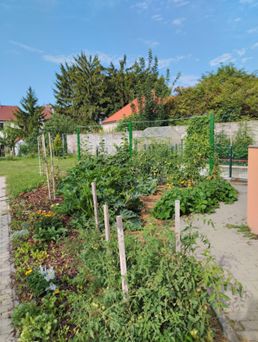
Sustainable Urban Food Production with a Special Focus on Permaculture from Hungarian Perspectives Andrea Uszkai In recent years in Hungary, interest in sustainable agriculture and food systems has grown, especially in the context of accelerating climate change. Conventional agriculture—highly mechanized, input-intensive, and monoculture-based—faces mounting criticism for its environmental impacts (e.g. soil degradation, biodiversity loss). […]
Interview with Andrea Szalavetz and new research articles by Tamás Csontos and Emese Dobos in the Special Issue of Köz-gazdaság

Köz-gazdaság – Review of Economic Theory and Policy Vol 20 No 3 (2025) – Published: 2025-09-26 – Special Issue – Ukraine’s reconstruction and integration. Finding Alternative Growth Engines in Central and Eastern Europe Interview with Andrea Szalavetz pages 8-16 PDF Return of Industrial Policy in the V4 Countries: Insights From the NIPO […]
Was There a Fiscal Free Lunch in Hungary Between 1999 and 2019? New research article by Miklós Váry in Emerging Markets Finance and Trade journal
Was There a Fiscal Free Lunch in Hungary Between 1999 and 2019? Miklós Váry Emerging Markets Finance and Trade – Published online: 24 Sep 2025 Abstract This article investigates whether there were periods between 1999 and 2019 in Hungary when government spending was self-financing, i.e. when there was a fiscal free lunch. Self-financing means […]