



Caring communities in senior care – municipal practices
and civic initiatives in rural Hungary
Gábriel Dóra
Introduction
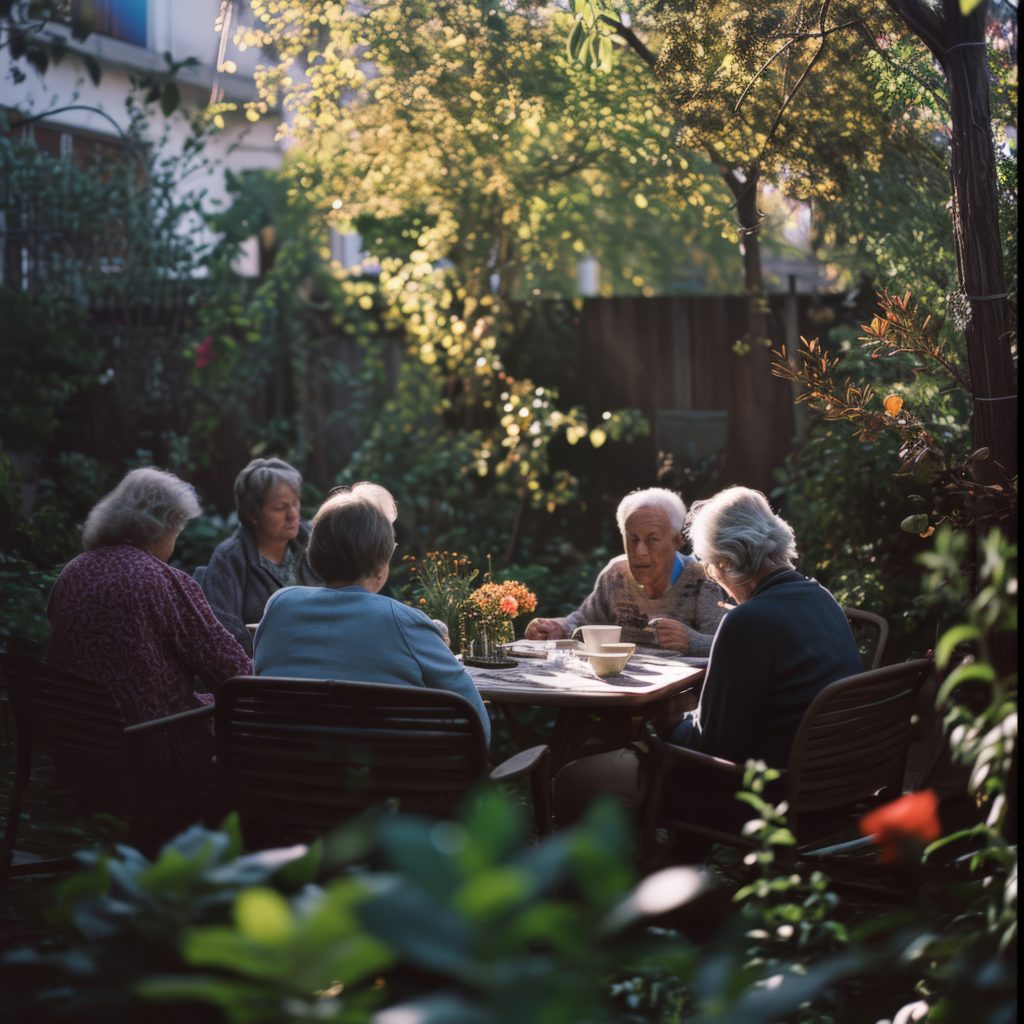
While community care is predominantly discussed in institutional settings and in terms of nursing practices in health care and social care institutions, caring community refer to a ‘mutual care philosophy, which has to be translated into concrete, localized practices in collaboration with the community’ (Wegleitner and Schuchter 2018, p. 90). Caring communities are organic and based on human interactions, in contrast to paid services that contain the danger of alienation (Horsfall et al. 2015). Caring communities have been regulated and incorporated into the senior care system in some Western European countries, in order to handle the challenges of demographic change. In Austria, Germany and Switzerland, state authorities explicitly claim that the aim of caring communities is to fill the care gaps resulting from insufficient state service provision (Klein and Weigel 2014).
Research questions
In our paper, we raised the following questions: 1) What does ’good care’ mean and how is it being achieved in the communities under consideration? 2) Under what institutional and social conditions do these communities operate? 3) What is the relation between state, market, and civil society in these communities? The empirical research was conducted at three fieldwork sites in Baranya County, Transdanubia, Hungary, where different community initiatives support the everyday life of older people living in the respective villages.
Method
The empirical research was conducted in three villages where ageing was a high-profile issue based on the active community life and existing social services. We visited each locality twice between March and November 2023. A total of 30 semi-structured interviews were conducted with mayors, community initiators, heads of social institutions, nurses, service users, and other active members of the community such as volunteers and other locals. Besides the interviews, we took fieldnotes and conducted several informal conversations with locals. The selection of the villages took place with the help of locally embedded people, who had prior knowledge of community initiatives and who have been involved in the life of the localities concerned.
Results
While each village has a particular community initiative directed toward older citizens, each mayor and community initiator formulates a unique credo regarding decent care provision aimed at older adults. These ideas include encouraging bottom-up initiatives, openness towards innovations in senior care and supporting vulnerable social groups. Besides formal institutions (such as daycare, the village council, civic bodies, etc.), various communities and initiatives have been established in these localities. Strong cooperation can be identified between the municipalities, civil society initiatives and possible other actors in the villages, while a membership overlap is common. The analysis points out that the age-friendly character of the municipalities does not only aim to support older people, but is also related to their political rationale to create jobs for local people.
The marketisation of residential care in Hungary is still underdeveloped compared to many other European countries. That is why it was interesting to see how market-based visions appeared in the narrative of local municipal stakeholders. While they aim to sell the age-friendly image on the market and fill the care gap in these villages, they also promote a family-like, high quality standard of care regardless of financial means, and thus opposing a merely market-oriented logic. The contradictory visions demonstrate that municipalities do not have the political aim to counteract marketisation tendencies but rather try to manoeuvre in the market while maintaining a communitarian approach to care provision.
Caring communities in senior care—municipal practices
and civic initiatives in rural Hungary.
Berlin J Soziol 35, 597–612 (2025).
https://doi.org/10.1007/s11609-026-00590-x
