



When Care Becomes Governance:
What Social Services Do Beyond Helping
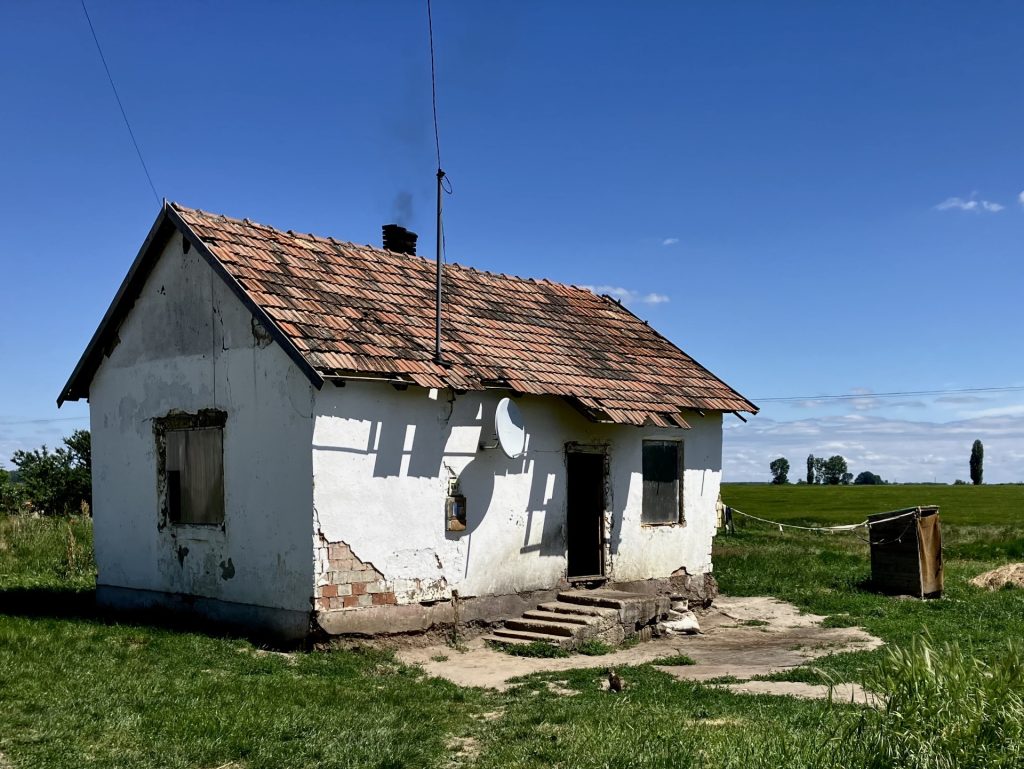
In Hungary, care has become a central language of social policy. Programmes promise support, inclusion and development, especially in disadvantaged rural areas. Yet the growing role of care also raises a broader question: what happens when care is not only about helping, but also about managing poverty? A recent study examines this question through faith-based social service provision, focusing on the Emerging Settlements programme. Based on qualitative interviews with social workers, programme staff and experts, the analysis explores how care is organised in practice – and what kinds of inequalities it may reproduce.
From welfare to selective care
The paper situates these developments within a longer transformation of the Hungarian welfare system. Over the past decades, universal and rights-based provision has gradually given way to more targeted, conditional and project-based interventions. At the same time, faith-based organisations (FBOs) have become increasingly central actors in delivering social services. In this context, care is no longer primarily organised through comprehensive public provision, but through locally embedded programmes. These interventions often operate with greater flexibility and responsiveness, yet they also reflect a shift away from redistribution toward more localised forms of support.
A fragmented geography of support
One of the study’s key findings is that care is distributed unevenly across space. The programme operates through a logic of selectivity: some settlements receive intensive, long-term support, while others with similar levels of deprivation remain outside these interventions. This produces a fragmented geography of care. Access to services is not determined solely by need, but also by programme design, institutional presence and funding arrangements. As a result, certain localities become highly visible and supported, while others remain largely excluded. From the perspective of those working in the field, this unevenness is a defining feature of everyday practice. Social workers often concentrate their efforts in a single locality, even as they remain aware that similar problems persist in neighbouring settlements without comparable support. In this sense, care becomes localised and contained, rather than addressing broader regional inequalities.
Reframing poverty
The paper also highlights how poverty is interpreted within these programmes. Although many of the targeted communities are predominantly Roma, ethnicity is rarely addressed explicitly. Instead, poverty is framed through notions of integration, behaviour, and responsibility. This framing allows programmes to avoid politically sensitive questions related to structural inequality and discrimination. At the same time, it shifts attention toward individual-level change. Success becomes associated with cooperation, lifestyle adjustments and “openness” to development. In practice, this can make access to support subtly conditional. While formal eligibility criteria may not explicitly enforce such distinctions, everyday interactions and professional judgements play an important role in determining who receives more attention and resources.
The dilemmas of everyday care
These dynamics are most visible in the everyday work of social professionals. The study shows that social workers operate at the intersection of care and governance. They are expected to build trust, support families, and respond to immediate needs, while also evaluating, categorising and reporting in line with programme expectations. This dual role generates a series of tensions. Professionals are tasked with empowering individuals, yet often within frameworks that prioritise behavioural change over structural transformation. They must make practical decisions about how to allocate limited resources, sometimes distinguishing between “cooperative” and “less cooperative” clients. Although many are aware of the broader structural causes of poverty, their scope for addressing these causes directly is limited. As a result, their work frequently takes the form of stabilisation: preventing situations from worsening, rather than enabling more fundamental change.
Care as a form of governance
Taken together, these findings point to a broader transformation in how poverty is addressed. Care emerges not only as a form of support, but also as a mode of governance. It shapes how problems are defined, how resources are distributed and what kinds of outcomes are considered achievable. In this configuration, care combines elements of compassion and control. It provides essential support, yet it also operates through evaluation, conditionality, and the management of behaviour.
Implications
The paper does not suggest that such programmes are ineffective. On the contrary, they offer crucial support in contexts where few alternatives exist. However, it does highlight the limits of a system that relies on selective, localised, and depoliticised forms of care. When structural inequalities are addressed primarily through local interventions, their underlying causes may remain intact. When poverty is reframed as an issue of behaviour or cooperation, it becomes more manageable, but less open to systemic change. These dynamics are not unique to Hungary. Across Europe, social policy increasingly relies on similar arrangements. The study therefore points to a broader question: can care-based interventions move beyond the stabilisation of marginality, and contribute to more transformative forms of social change?
 This blog post is based on the paper Governing through care: faith-based social service provision in rural Hungary written by Luca Sára Bródy and Gábor Dániel Velkey
Territory, Politics, Governance, 1–16. https://doi.org/10.1080/21622671.2026.2618168
