



Restructuring of the state-market relations in Turkey:
An analysis of infrastructure failures in the transportation sector
Over the past two decades, Turkey has invested heavily in large-scale transport infrastructure projects to showcase economic strength and modernisation. New bridges, highways, airports, and high-speed rail lines have become central elements of political communication and development strategy. However, the devastating earthquakes of February 2023 also exposed the vulnerabilities and contradictions of this infrastructure-led development model.
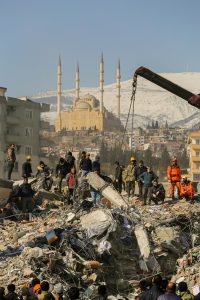
The earthquakes not only caused enormous human and material losses, but also raised broader questions about state capacity, governance, and the priorities of economic development. Why were some infrastructures unable to withstand the disaster? Why did rescue and logistical operations face severe difficulties in the aftermath of the earthquakes? And what do these failures tell us about the changing relationship between the state and the market in Turkey?
In our recently published article, we examine how transport infrastructure development in Turkey has been shaped by shifting state-market relations, and why infrastructure failures and operational problems have become increasingly visible.
The Return of the state(?)
Neoliberalism is often associated with the retreat of the state and the growing dominance of markets. The Turkish case, however, suggests a more complicated reality. Rather than disappearing, the state has been reconfigured: it remains deeply involved in the economy while building increasingly close relationships with selected private actors.
Transport infrastructure development offers a particularly revealing example of this process. Many projects have been implemented through public-private partnerships (PPPs), backed by extensive state guarantees. While these projects were presented as symbols of modernisation and national progress, they have also exposed significant structural problems. Cost overruns, overly optimistic demand projections, low usage rates, and long-term financial burdens have all raised questions about the sustainability of this development model.
In Turkey, transport megaprojects have simultaneously served economic, political, and ideological purposes. Beyond improving mobility, they have contributed to sustaining economic growth, strengthening political legitimacy, and supporting specific business groups closely connected to the state.
Infrastructure, crisis, and vulnerability
The 2023 earthquakes acted as a dramatic stress test for Turkey’s infrastructure model. While transport networks became crucial for rescue operations and humanitarian aid, the disaster also exposed weaknesses in planning, coordination, and institutional capacity.
Our article argues that such infrastructure failures are not merely technical problems. Rather, they reveal deeper transformations in state-market relations. These megaprojects relied heavily on external financing, state guarantees, and close cooperation between political and business elites. This development model also created growing structural vulnerabilities and dependencies, which became particularly visible during times of crisis.
The 2023 earthquakes made the existing structural tensions impossible to ignore, revealing how infrastructure projects are deeply intertwined with political and economic priorities. It also intensified public debates about the long-term sustainability of construction-led development and the broader social and economic vulnerabilities associated with it.
What can we learn from the Turkish case?
The Turkish experience resonates far beyond Turkey itself. Around the world, governments increasingly rely on large-scale infrastructure projects as engines of growth and symbols of national ambition, while the relationship between states and markets continues to evolve.
Our research highlights the importance of looking beyond the technical dimensions of infrastructure. Roads, bridges, airports, and railways are never just engineering projects: they are also shaped by political choices, economic interests, and social conflicts.
Infrastructure, therefore, not only connects places – it also reveals how contemporary political and economic systems operate.
 Sarımehmet Duman, Ö., & Szunomár, Á. (2026).
Restructuring of the state-market relations in Turkey: an analysis of infrastructure failures in the transportation sector.
New Political Economy, 1–24. https://doi.org/10.1080/13563467.2026.2669553