



Olympic success may depend less on choosing
between focus and diversification than on avoiding the middle ground
Gergely Csurilla and Imre Fertő
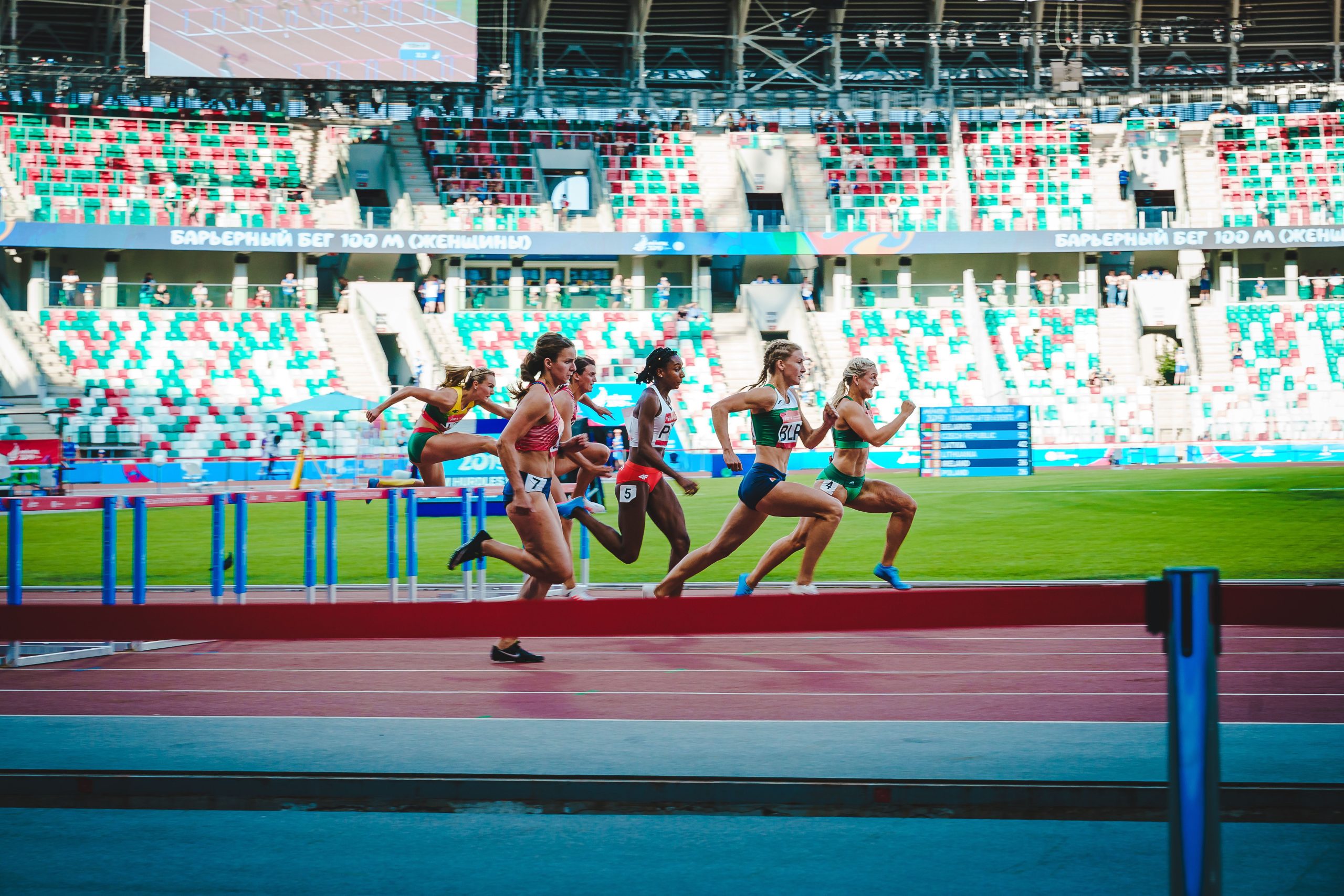
National Olympic committees face a familiar public policy problem: how should scarce resources be distributed when success is uncertain? One option is to concentrate support on a small number of sports with strong medal prospects. Another is to spread investment across a much broader portfolio.
Our study of every nation competing at the Summer Olympic Games between 1996 and 2024 suggests that both approaches can work. What appears less effective is trying to do both at once. Countries with strongly diversified or strongly concentrated Olympic portfolios tend to outperform those pursuing an intermediate strategy.
Olympic sport policy is a portfolio problem
Elite sport systems operate under substantial resource constraints. National sport agencies and Olympic committees must decide how to distribute financial support, coaching capacity, facilities, talent-development programmes and other resources across sports. They can focus on a handful of sports in which medals seem particularly attainable or support a wider range of disciplines.
This resembles a portfolio decision. Firms and investors choose between concentration and diversification; Olympic systems face an analogous strategic choice, albeit with very different objectives and institutional constraints. The important question is therefore not simply how much a country spends on elite sport, but how its sporting capacity is distributed.
Until now, answering this question comparatively has been difficult. Research has typically relied on sport-by-sport expenditure data. Such information is available for relatively few countries, accounting systems vary considerably between them and financial data may fail to capture non-financial support such as coaching or talent development. Previous comparative studies have consequently tended to concentrate on a relatively small group of successful nations.
We therefore took a different approach.
Olympic teams reveal something about countries’ priorities
Instead of observing spending directly, we use the composition of a country’s Olympic delegation as a proxy for its revealed strategic emphasis.
The intuition is straightforward. By the end of an Olympic cycle, years of investment in athletes, coaches and qualification pathways are partly reflected in who actually qualifies for the Games. A country sending a substantial proportion of its delegation into one sport has developed considerably more competitive capacity there than a country with little Olympic representation in that sport.
Of course, simply counting athletes would be misleading. Swimming, athletics and judo, for example, do not offer the same number of medal opportunities, while team sports have unusually large squads. We therefore adjust countries’ athlete shares according to the number of medal opportunities available in each sport. The resulting measure should be interpreted as an opportunity-adjusted proxy for strategic emphasis, rather than a direct estimate of government spending.
We then use the Herfindahl–Hirschman Index, a standard measure of concentration, to characterise each country’s Olympic portfolio. A low index indicates that Olympic capacity is spread relatively widely across sports; a high index means that it is concentrated in relatively few.
This approach has an important advantage: delegation data are observable across essentially the entire Olympic system. Rather than studying only countries for which detailed expenditure accounts happen to exist, we can compare the strategies of all competing nations.
Our dataset covers the Summer Games from 1996 to 2024, combining Olympic results and athlete data with socioeconomic indicators from the World Bank.
Richer and larger countries diversify more
The first pattern is intuitive but important.
Countries with higher GDP per capita and larger populations generally have more diversified Olympic portfolios. Greater financial resources allow more sports to be supported at an internationally competitive level, while larger populations provide a broader pool from which elite athletes can emerge.
Historical institutions matter too. Former communist countries tend to retain relatively diversified Olympic portfolios, consistent with the legacy of systems that developed competitive capacity across many sports. By contrast, the United States, China and Russia – which we treat separately as Olympic “superpowers” – display comparatively greater concentration in the analysis.
These patterns matter because they remind us that sporting strategy does not operate independently of national circumstances. A small country with limited resources does not face the same portfolio possibilities as a large, wealthy state.
Yet economic and demographic differences do not explain the most striking result.
There are two routes to Olympic success
If concentration simply improved medal performance, we would expect a straightforward relationship: the more a country focused its resources, the better it would perform.
We do not find this.
Instead, the relationship between portfolio concentration and Olympic performance is U-shaped. Countries towards either end of the spectrum – highly diversified or highly concentrated – have higher predicted Olympic success than countries occupying the middle.
The marginal predictions provide further nuance. Highly diversified portfolios are associated with the highest predicted medal shares, although outcomes are also more uncertain. Highly concentrated strategies are associated with somewhat lower average medal shares but relatively more predictable performance. Intermediate portfolios perform worst.
This changes how the familiar debate between “targeting” and “diversification” should be understood.
There does not appear to be a single universally optimal Olympic strategy. Rather, there are two coherent strategic positions.
A country can build capacity across many sports, creating numerous potential routes to medals. Or it can concentrate its limited resources on a much smaller set of disciplines where it believes it has a competitive advantage.
What seems less successful is an ambiguous strategy in which resources are neither sufficiently concentrated to create clear specialist advantages nor sufficiently broad to realise the benefits of diversification.
The same pattern appears when we examine not just medal totals but the breadth of sporting success. Countries with diversified portfolios tend to win medals across more sports. Concentrated countries achieve lower average breadth but more predictable outcomes, while intermediate strategies again underperform.
Prioritising a sport is associated with winning more medals in it
Our country-level results tell us how entire portfolios perform. But we also examine individual sports within countries.
Here the relationship is much simpler.
When a sport occupies a larger share of a country’s opportunity-adjusted Olympic portfolio, that country tends to win a larger proportion of its medals in that sport. The relationship is positive and statistically significant.
This does not establish that moving an additional pound, euro or dollar into a particular sport mechanically produces medals. Our measure captures the accumulated outcome of a much wider development process, including talent identification, coaching, competition structures and qualification.
Nevertheless, it provides evidence that revealed prioritisation and sporting success are closely connected.
The lesson for policymakers is not simply “diversify”
There is a temptation to convert results like these into a universal prescription. Because diversified countries have the highest predicted medal shares and succeed across a broader range of sports, one might conclude that every country should diversify.
That would go beyond our evidence.
Countries differ enormously in resources, population, sporting traditions and policy objectives. Diversification may be feasible for a large, wealthy sporting nation but impossible for a small system. Conversely, concentrating resources may allow smaller countries to build internationally competitive programmes in a limited set of disciplines.
The more useful policy implication is therefore about strategic coherence.
If medal maximisation is the objective, policymakers should make an explicit portfolio choice. A broadly diversified strategy and a strongly prioritised strategy can both be associated with success. A halfway position appears considerably less attractive. The appropriate choice should reflect national resources, existing capabilities and policymakers’ willingness to tolerate risk.
There are also objectives beyond medals. Governments may support sports because of cultural significance, participation benefits, gender equity, geographical considerations or the development of domestic sporting institutions. A portfolio designed around those objectives may quite reasonably look different from one designed exclusively to maximise Olympic medals.
Delegations are not the same thing as budgets
Our new indicator also has clear limitations.
Qualification rules constrain how many athletes countries can send, and these restrictions vary substantially between sports. Team sizes are partly determined by competition rules rather than national strategy. Sports also differ in their cost structures and in the extent to which chance influences medal outcomes.
For these reasons, Olympic delegation composition cannot be interpreted as a direct measure of expenditure. More detailed data on athletes in national talent pathways, and eventually comparable discipline-level investment data, would provide a richer picture.
We nevertheless find the central results to be robust when team sports are excluded and when the analysis is restricted to top-eight performances.
The trade-off is therefore a useful one. Delegation composition is an imperfect proxy, but its availability makes it possible to examine Olympic portfolio strategies across a vastly broader set of countries than financial data currently allow.
From “how much?” to “how should it be allocated?”
Much research on Olympic performance understandably asks whether spending more produces more medals. For policymakers facing fixed budgets, however, another question may be at least as important: how should those resources be distributed?
Our findings suggest that there is no simple contest in which either specialisation or diversification wins.
Both can constitute viable strategies. What matters is that the structure of the Olympic portfolio corresponds to a country’s resources, capabilities and objectives. For national Olympic committees and public funding agencies, that means treating allocation across sports as a genuine strategic decision rather than allowing it to emerge as an accidental compromise between competing priorities.
This post draws on Gergely Csurilla, Andreas Christoph Weber and Imre Fertő, “Prioritising or diversifying in Olympic summer sports? Olympic delegation composition as a new proxy for resource allocation”, published in the International Journal of Sport Policy and Politics in September 2026.