


Mapping Layers of Sustainability Consciousness in Food Consumption Using the Item Response Theory (IRT) Approach
by Zoltán Bakucs, Lajos Baráth, Zsófia Benedek, Imre Fertő, László Sipos
Wage insurance against short-term sales changes – new research paper by Róbert Károlyi has been published in Economica journal
Wage insurance against short-term sales changes Róbert Károlyi Economica – Volume93, Issue372 – Special section: Economy 2030 Symposium – October 2026 – Pages 1206-1224 – First published: 28 April 2026 Abstract In this paper, I study how the wages of job-stayers respond within the year to changes in firm sales, using quarterly matched employer–employee data from […]
Farmers do not simply retire: Why generational renewal in agriculture needs more than subsidies – by Imre Fertő

Farmers do not simply retire: Why generational renewal in agriculture needs more than subsidies Imre Fertő Across Europe, the ageing of the farming population is often discussed as if it were a straightforward succession problem: too many older farmers, too few young entrants, and insufficient incentives to make the transfer happen. The implied […]
EU sanctions and Visegrad–Russia trade by Csaba Weiner
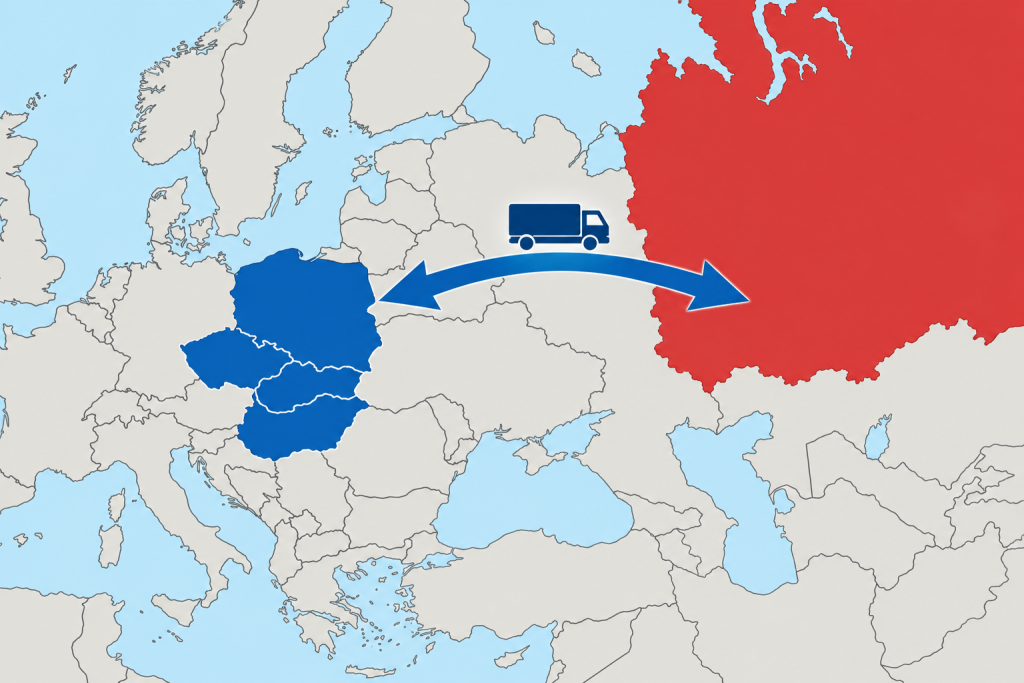
EU sanctions and Visegrad–Russia trade Csaba Weiner Research questions and scope Since 2014, the European Union has imposed successive rounds of sanctions on Russia, which expanded substantially after Russia’s full-scale invasion of Ukraine in February 2022. But how did these measures affect trade between Russia and the Visegrad countries – Czechia, Hungary, Poland, […]
EV cluster Hungary? Co-location and co-evolution of German OEMs and Asian EV investors and the transformation of Hungary’s and Europe’s automotive value chains
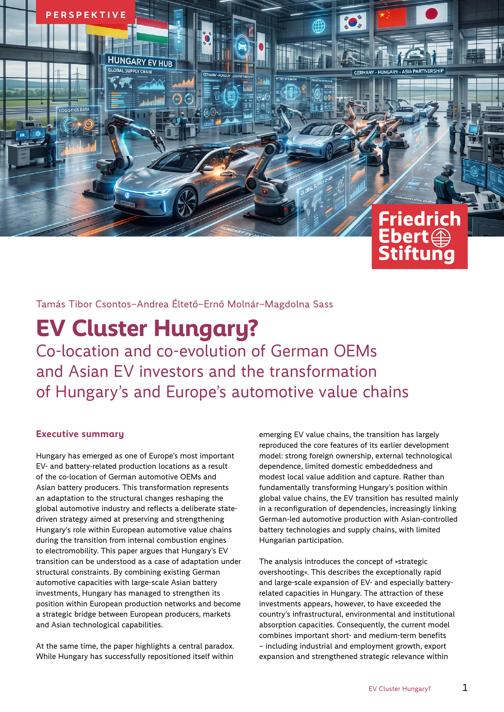
Authors: Tamás Tibor Csontos, Andrea Éltető, Ernő Molnár and Magdolna Sass
Out of School and Into Trouble? What Happened When Hungary Lowered the School Leaving Age – By Anna Adamecz, Dániel Prinz, Sunčica Vujić and Ágnes Szabó-Morvai

Out of School and Into Trouble? What Happened When Hungary Lowered the School Leaving Age – By Anna Adamecz, Dániel Prinz, Sunčica Vujić and Ágnes Szabó-Morvai What happens when a government lets teenagers leave school earlier? In 2012, Hungary lowered the school leaving age from 18 to 16 for all secondary school students. The […]
Marginalisation or mobilisation through electromobility? Depicting the pharmakon nature of Chinese EV battery investments in Hungary – new research study by Ágnes Szunomár
Marginalisation or mobilisation through electromobility? Depicting the pharmakon nature of Chinese EV battery investments in Hungary Ágnes Szunomár Molbilities – Published online: 22 Aug 2026 Abstract This study, drawing on Sheller’s multi-scalar approach to mobility justice, Urry’s approach to mobilities as interconnected networks, and the worlds on the move concept of this special […]
Price caps do not stop price transmission – they change where it happens – by Imre Fertő and Szilárd Podruzsik

Price caps do not stop price transmission – they change where it happens Imre Fertő, Szilárd Podruzsik Government interventions in food markets are usually judged by what happens to prices at the checkout. But focusing only on consumer prices can obscure how regulation changes the distribution of adjustment across the supply chain. Drawing on […]
Out of school and into trouble? Labor market impacts of decreasing the school leaving age – by Anna Adamecz, Ágnes Szabó-Morvai and co-authors
Out of school and into trouble? Labor market impacts of decreasing the school leaving age Anna Adamecz, Dániel Prinz, Sunčica Vujić, Ágnes Szabó-Morvai Education Economics – Published online: 3 Sep 2026 Abstract This paper investigates the labor market impacts of a reform that universally lowered the school leaving age from 18 to 16 in Hungary. Using […]
Integrating resilience and sustainability in new product development by Central European automotive firms: is there synergy or two independent concepts? by Gábor Túry and co-authors

Integrating resilience and sustainability in new product development by Central European automotive firms: is there synergy or two independent concepts? Petr Procházka – Eva Křenková – Gábor Túry Logistics Research 1–25. September 2, 2026 Purpose This paper examines how automotive manufacturers in Hungary and Czechia have implemented resilience and sustainability measures within new product […]