






The presentation will take place in a hybrid format via zoom interface or in person in the room K.0.11-12 on 15.05.2025, from 13.00.
Speaker: Oleg Badunenko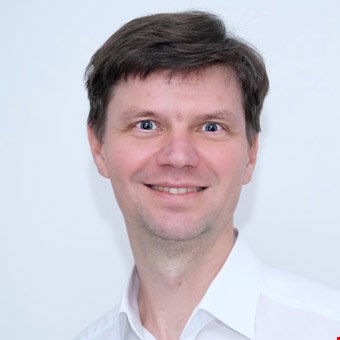
Title: The Global Financial Crisis: Efficiency, Technological innovation, Capital deepening, and Labor mobility
Abstract:
We employ a non-parametric production frontier approach to document the sources of productivity growth in 26 OECD countries. Our analysis utilizes data from 10 sectors during 2002-2014. The state of technology is sector specific but common across countries. Prior to the 2007-global financial crisis and during the subsequent recovery phase, technological progress and capital deepening emerged as the primary contributors to positive productivity growth. However, during the recession, technological progress was notably absent in several sectors, with the exception of information and communication technology, manufacturing, and real estate. Conversely, efficiency losses served as a hindrance to productivity growth.
BIO:
Oleg Badunenko is an Associate Professor at Brunel University London. His research interests are in the economics and applied microeconometrics. Oleg’s focus is on efficiency and productivity analysis in various areas of societal life, whereby he both develops and applies best-practice methods, and provides software for practitioners. As such, he investigates real-world phenomena in health, education but also in banking and manufacturing. His research investigates the socio-economic determinants of behavior and efficiency at the school and higher education levels, and determinants of productivity in the health care sector. His recent work investigates choices that individuals make trading off security and privacy as well public and private sector employment. He is additionally working on issues related to competition in banking and effects of macroeconomic events on banks’ behavior.


