




KTI szemináriumi terem; 13.00-14.00
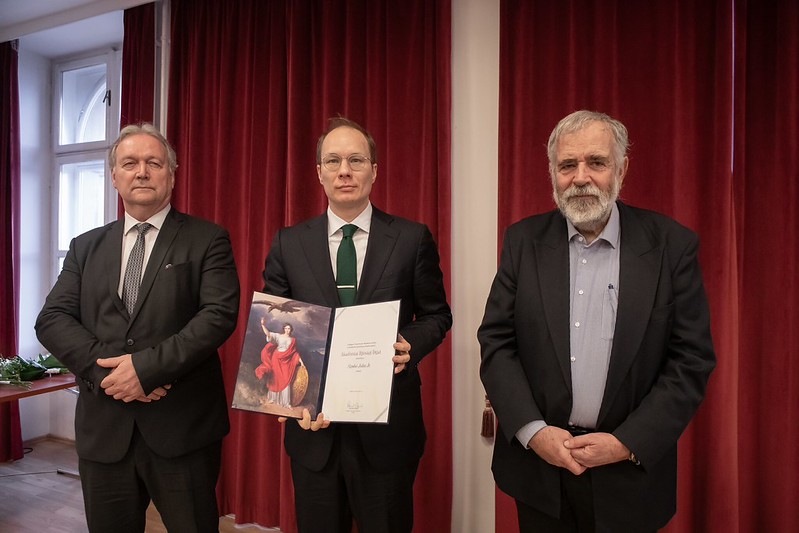
Előadó: Hörcher Dániel
Daniel Hörcher is postdoctoral research associate at the Transport Strategy Centre (TSC) within the Centre for Transport Studies (CTS) at Imperial College London.
Cím:
Transport interventions in general equilibrium:
Bridging transport research with quantitative spatial economics
Abstract
As one of the most impactful applications of microeconomic theory and empirical research, major transport investments in the United Kingdom and the European Union must be justified in a welfare economic analysis, following official guidelines called the transport appraisal methodology. However, this consensual method is currently restricted to partial equilibrium, creating a natural need to explore the spatial general equilibrium impact of transport interventions. The emerging literature of quantitative spatial models (QSMs) offers a theoretically consistent and empirically relevant framework to rationalise observed spatial outcomes as the equilibrium of a geographically detailed model and perform counterfactual simulations of hypothetical place-based policies. In this research we explore whether QSMs may at some point replace current practices in transport appraisal, and what methodological developments are necessary for the state-of-the-art representation of the transport market in a spatial model. As a proof of concept we develop and quantify a QSM in which commuters’ travel time valuation is an endogenous outcome of their choice of residence and workplace locations and the monetary and time constraints they face. Through this illustrative model, the talk provides a general introduction to the emerging subdiscipline of transport economics for a generalist audience.


