



Demographic Transformation, Eroding Social Capital and Segregation on Outskirt Areas of Hungarian Cities – article by Gábor Vasárus, Ádám Szalai & József Lennert

Demographic Transformation, Eroding Social Capital and Segregation on Outskirt Areas of Hungarian Cities Gábor Vasárus – Ádám Szalai – József Lennert Critical Housing Analysis Volume 12 | Issue 1 | 2025 | 1-11 This paper examines a relatively overlooked aspect of the post-socialist demographic transition in Hungary: the socioeconomic changes and segregation processes […]
Battle of the Batteries: Chinese EV Investments and the Issue of Local Content Requirements – article by Ágnes Szunomár

Battle of the Batteries: Chinese EV Investments and the Issue of Local Content Requirements Ágnes Szunomár June 17, 2025 – China Observers in Central and Eastern Europe (CHOICE) In recent years, Central and Eastern European (CEE) countries – in particular Hungary and Slovakia – have become major recipients of Chinese EV investments. While EV […]
Round-Tripping Foreign Direct Investment: Why It Matters and What Can Be Done – by Magdolna Sass and Imre Fertő
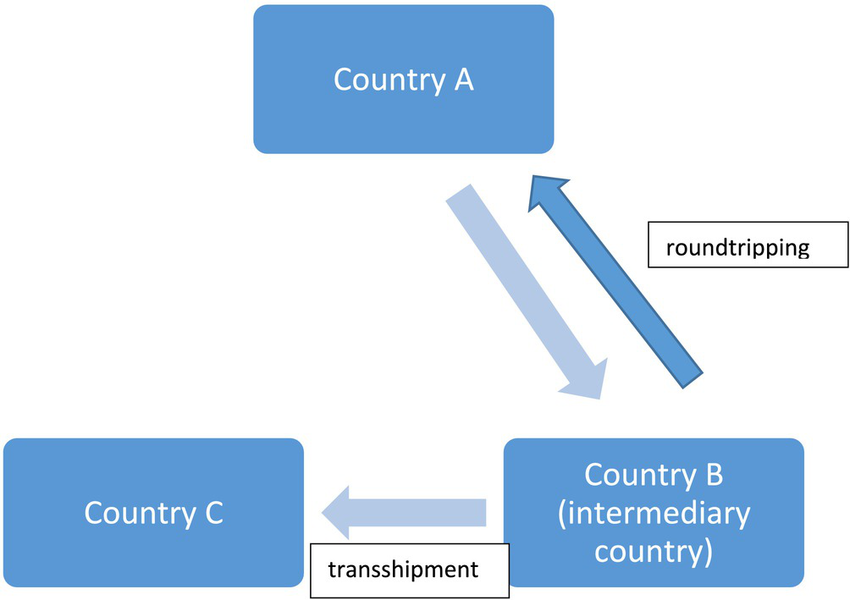
Round-Tripping Foreign Direct Investment: Why It Matters and What Can Be Doneby Magdolna Sass, Imre Fertő In an increasingly interconnected global economy, traditional measures of Foreign Direct Investment (FDI) often fail to capture the full story. One phenomenon that has slipped under the radar of policymakers and researchers alike is “round-tripping” FDI: funds originally […]
The results of a qualitative focus group research and a case study in the region of Szigetköz, Hungary by Petra Kinga Kézai and Szandra Gombos

Remarks on the rural development of the cultural and creative industries in North-Western Hungary – The results of a qualitative focus group research and a case study in the region of Szigetköz, Hungary Petra Kinga Kézai – Szandra Gombos International Journal of Innovative Research and Scientific Studies,Vol. 8 No. 3 (2025) pages: 4865-4873 […]
Factors influencing the spatial distribution of international retirement migrants settling in Hungary – by Dóra Gábriel

Factors influencing the spatial distribution of international retirement migrants settling in Hungary This paper focuses on the spatial aspects of international retirement migration in Hungary. We employ the theoretical framework and concepts of international retirement migration, lifestyle migration, and geoarbitrage. We seek to answer the following research questions: 1) What are the basic demographics, spatial […]
Who would support and pay for a residential carbon tax in Hungary – and under what conditions? – Csaba Weiner – Dániel Muth

Supply–demand price decoupling in European-type day-ahead electricity markets – new co-authored research article by Dávid Csercsik
Supply–demand price decoupling in European-type day-ahead electricity markets Anita Varga, Botond Feczkó, Marianna E.-Nagy, Dávid Csercsik International Journal of Electrical Power & Energy Systems – Volume 169, August 2025 Highlights We propose a novel approach for the clearing of day-ahead electricity markets. In the proposed clearing model, clearing prices for supply and demand may […]
Dysfunctional advocates? analysis of the Visegrad Group positions on the enlargement policy of the EU (2014–2025) – by Boglárka Koller & Krisztina Arató

Dysfunctional advocates? analysis of the Visegrad Group positions on the enlargement policy of the EU (2014–2025) Boglárka Koller & Krisztina Arató Published: 11 June 2025 – Comparative European Politics Abstract The Visegrad Group (V4), a unique subregional cooperation within the European Union, has experienced a negative shift following the Russian aggression in Ukraine. The […]
Wellbeing and environmental performance of the Visegrad countries at the beginning of the 21st century – by Csaba Lakócai

Wellbeing and environmental performance of the Visegrad countries at the beginning of the 21st century Csaba Lakócai Following the dissolution of state-socialist systems, there was a rapid institutional convergence between postsocialist Central and Eastern Europe (CEE) and the West. However, the institutional convergence was accompanied by a decline in formal economic development indicators […]
Can natural gas be made visible, or viable? Book chapter by John Szabó in Power Shift – Keywords for a New Politics of Energy
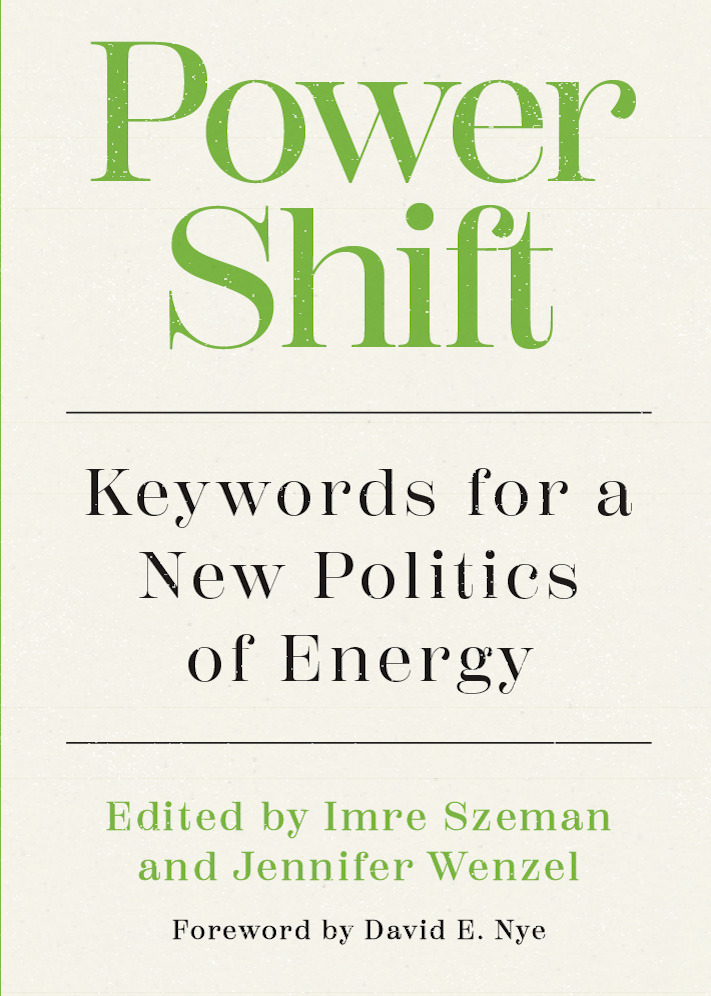
Power Shift Keywords for a New Politics of Energy Edited by Imre Szeman and Jennifer Wenzel West Virginia University Press – April 2025 – 374 pp Energy and Society series Chapter Natural GasCan natural gas be made visible, or viable?John Szabo Summary Power Shift traces recent social and cultural shifts in […]