


Miklos Koren is the recipient of the CEU Research Excellence Award
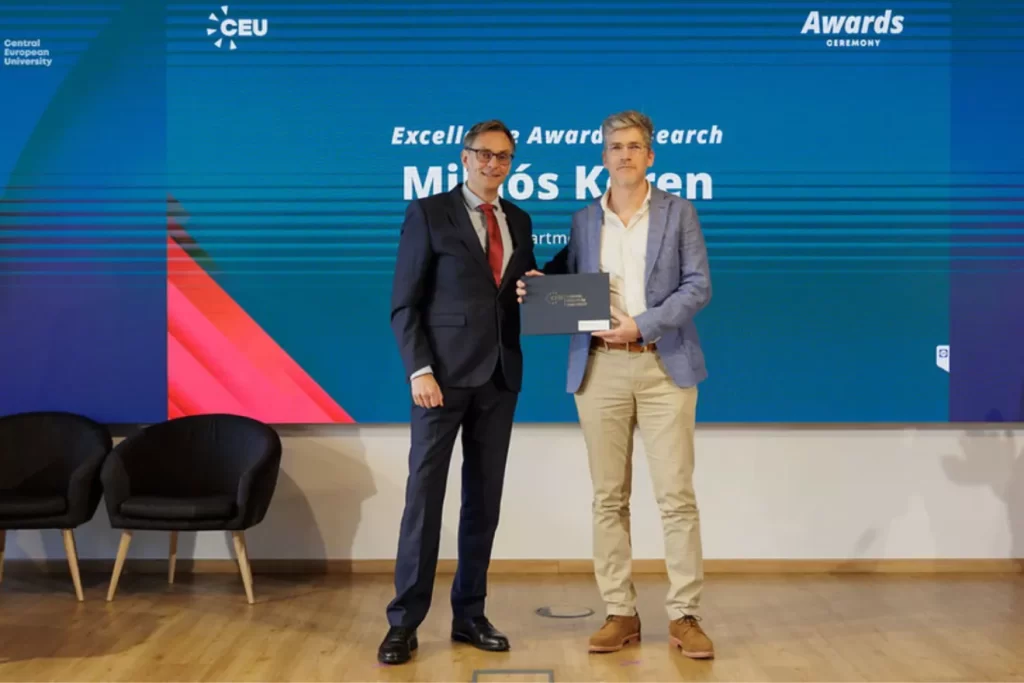
Research Excellence Award recognizes excellence in research by CEU academic staff. It is intended to acknowledge and showcase research output of outstanding quality produced in the year preceding the award, which has had a significant international impact. Miklós Koren is an internationally recognized economist whose research on trade, development, and firm behavior has had a significant global impact. His work, […]
Twinning and cross-border cooperation in the Hungary-Romania border region – by Zoltán Pámer

Twinning and cross-border cooperation in the Hungary-Romania border region by Zoltán Pámer The article examines twinning and cross-border cooperation in the Hungary–Romania border region, showing how traditional town-twinning evolved alongside euroregions, EGTCs, and Interreg programmes. Its main finding is that existing twinning relations often support project-based cooperation, especially around major cities and nearby border […]
Where Should Economists Draw the Line in Using AI? AI can make research faster, but the scarce resource in economics will increasingly be judgement, validation and responsibility – blog post by Imre Fertő

Where Should Economists Draw the Line in Using AI? AI can make research faster, but the scarce resource in economicswill increasingly be judgement, validation and responsibility. Imre Fertő 15/06/2026 – AES blog Artificial intelligence (AI) is no longer merely a new tool on the economist’s desk. Less than a year ago, I argued […]
The Trajectory of Olympic Success: Entry, Sustainability and Efficiency – Gergely Csurilla – Imre Fertő
Efficiency in the Olympic Games: The Role of Mobility and Inequality – by Gergely Csurilla, Imre Fertő and Lajos Baráth
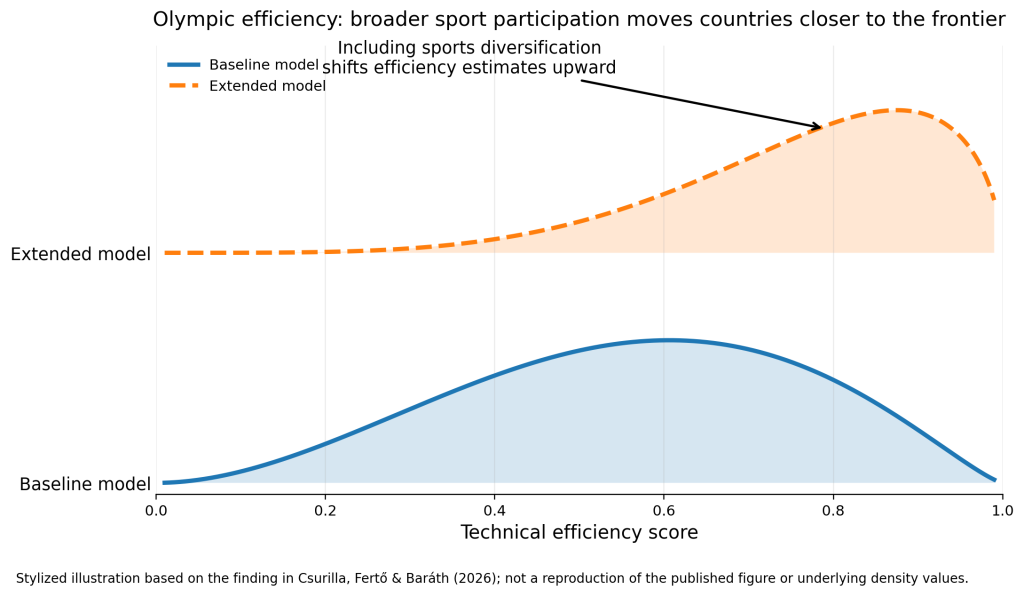
Efficiency in the Olympic Games: The Role of Mobility and Inequality by Gergely Csurilla, Imre Fertő and Lajos Baráth The Olympic Games are usually discussed through medal tables. Countries are ranked by the number of gold, silver and bronze medals they win, and public attention naturally focuses on the nations at the top. But this […]
Mobilising care in the polycrisis: framing eco-social activism in Hungary, Czechia, and Poland – new co-authored study by Luca Sára Bródy in Environmental Politics journal

Mobilising care in the polycrisis: framing eco-social activismin Hungary, Czechia, and Poland Luca Sára Bródy, Michaela Pixová & Elżbieta Korolczuk Environmental Politics – Published online: 04 Jun 2026 Abstract In this article we explore how eco-social movements in Hungary, Czechia, and Poland mobilise care as a political and strategic framework in response to the interconnected crises […]
Efficiency in the Olympic Games: The Role of Mobility and Inequality – new study by Gergely Csurilla, Imre Fertő and Lajos Baráth

“This study examines how effectively countries convert their economic and demographic resources into Olympic success. Using data from the 1996–2020 Summer Games and a random-parameter stochastic frontier model, we find that the average country operates at only 68% of its attainable performance frontier, and that sports diversification – competing across a broader range of disciplines […]
Hungary: The Allied Outlier – book chapter by Boglárka Koller in Springer’s Security, Defence, and the Future of Europe
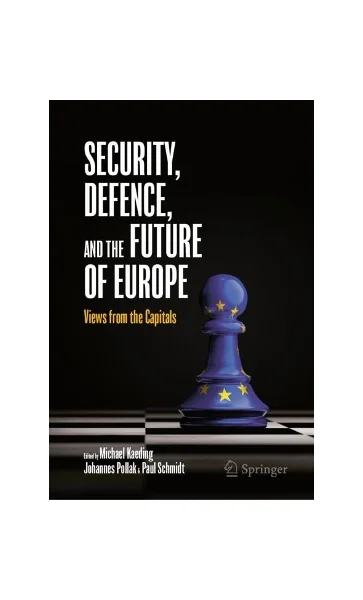
Security, Defence, and the Future of Europe Views from the Capitals Editors: Michael Kaeding, Johannes Pollak, Paul Schmidt © Springer Nature Switzerland AG 2026 This book provides a panoramic and comparative view of how Europe is currently redefining its security and defence in an age of renewed geopolitical tension and uncertainty. After Russia’s full-scale […]
How are the interests of local and regional governments represented in the European Parliament? – Balázs Brucker
The green leap forward? State capitalism, industrial policy, and the limits of green transformation in China – new scientific study by Ágnes Szunomár in Post-Communist Economies journal
The green leap forward? State capitalism, industrial policy, and the limits of green transformation in China Ágnes Szunomár Post-Communist Economies – Published online: 26 May 2026 Abstract China’s rapid expansion in green industries – the green leap forward – is frequently cited as evidence of the effectiveness of state-led industrial policy in accelerating technological upgrading and […]